

What Are the Benefits of Wellness-Focused Interior Design? A Designer's Honest Take
Your Home Is Already Affecting Your Health. The Question Is How.
I've had this conversation probably a hundred times. A client walks in and says something like, "I just want it to feel better in here. I don't know why it doesn't." And nine times out of ten, the answer isn't a new sofa or a fresh coat of paint. It's the whole picture. The light coming in at the wrong angle. The off-gassing from the furniture they bought in a rush. The layout that makes them feel hemmed in the moment they walk through the door.
Your home is always working on you. The question is whether it's working for you.
That's the core idea behind wellness-focused interior design. And lately, it's not a fringe conversation anymore. Searches for "wellness rooms" are up 164%, and "calming" as a design keyword has surged 139%. People are paying attention to this. They're asking the right questions. I just want to make sure they're getting real answers.
So let me give you mine.
What is wellness interior design, actually?
It's not spa aesthetics. It's not a salt lamp in the corner and a diffuser running eucalyptus. Wellness interior design means your space is intentionally designed to support your physical health, mental clarity, and emotional balance, not just look good in photos.
The most significant shift happening right now is a move away from simply adding wellness features to a traditional home and toward holistically designing the entire home for wellness from the ground up. When wellness is embedded in the architecture itself rather than treated as an accessory, it amplifies every opportunity for healthier living.
That's the version I believe in. Not a wellness-themed room. A home that actually functions as a system of support for the people living in it.
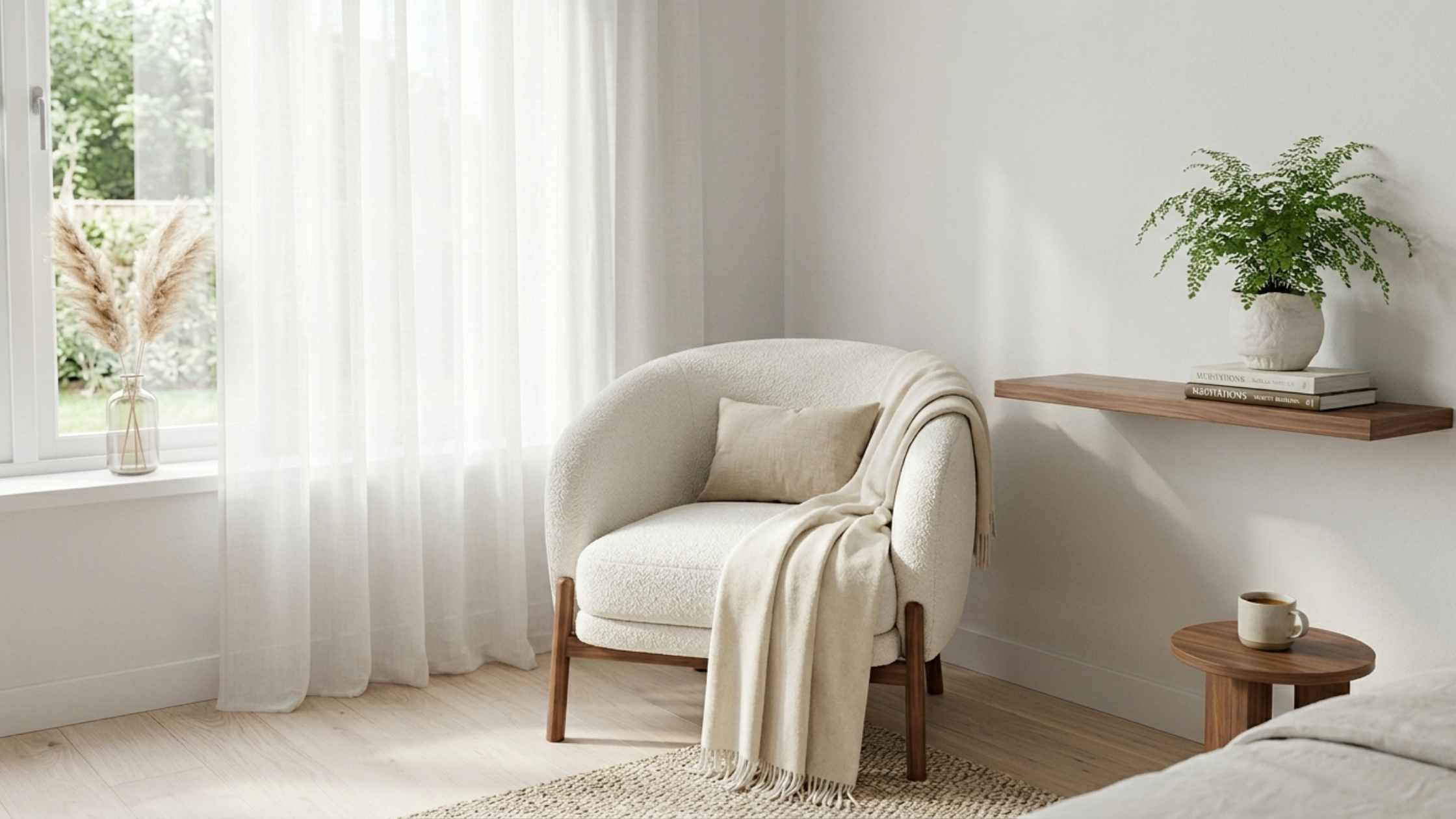
Benefit #1: Better indoor air quality, and it matters more than you think
Here in Wilmington, we deal with humidity, mold pressure, and coastal air quality issues that a lot of inland clients don't. I think about indoor air a lot. Most people don't think about it at all, until they start having headaches, or allergies that won't quit, or they just feel foggy in a way they can't explain.
Buildings that have become more airtight for energy efficiency have also begun to trap microscopic particles released from synthetic materials such as carpets, upholstery, paints, and finishes. These particles are now being detected in human lungs and bloodstream, raising concerns about long-term health impacts.
That's what's coming off the particle board furniture, the synthetic carpet, the conventional paint. It's not dramatic. It's just constant.
The fix isn't complicated but it does require intention. It means choosing materials that don't off-gas. It means natural fiber textiles, solid wood over engineered composites, low-VOC or zero-VOC finishes. Advanced filtration is no longer an afterthought. It's being integrated into HVAC systems from the design phase, and indoor air quality monitors are being built into smart home systems, providing real-time feedback.
Breathing clean air inside your own home shouldn't be a luxury. But getting there requires making different choices than the ones most furniture showrooms are pointing you toward.
Benefit #2: Your nervous system gets a break
Many people live in a constant state of stress due to lifestyle pressures, environmental factors, and digital overload. Before conscious awareness, the body continuously scans its surroundings for safety or threat through a process known as neuroception.
I think about this a lot when I'm designing a room. Is this space going to tell someone's nervous system that they're safe? Or is it going to keep them on low-level alert without them ever knowing why?
Cluttered sightlines do this. Harsh overhead lighting does this. Rooms that have no transition, no softness, no place to exhale. Most homes are just not designed with this in mind because nobody asks the right questions during the design phase.
Clients aren't just asking for homes that look good anymore. They want homes that feel good, regulate their nervous system, and help them recover from the pace of modern life. The shift is from aesthetics to atmosphere.
That's exactly it. Atmosphere. I can make a room beautiful in an afternoon. Creating an atmosphere that actually restores you takes a different kind of thinking.
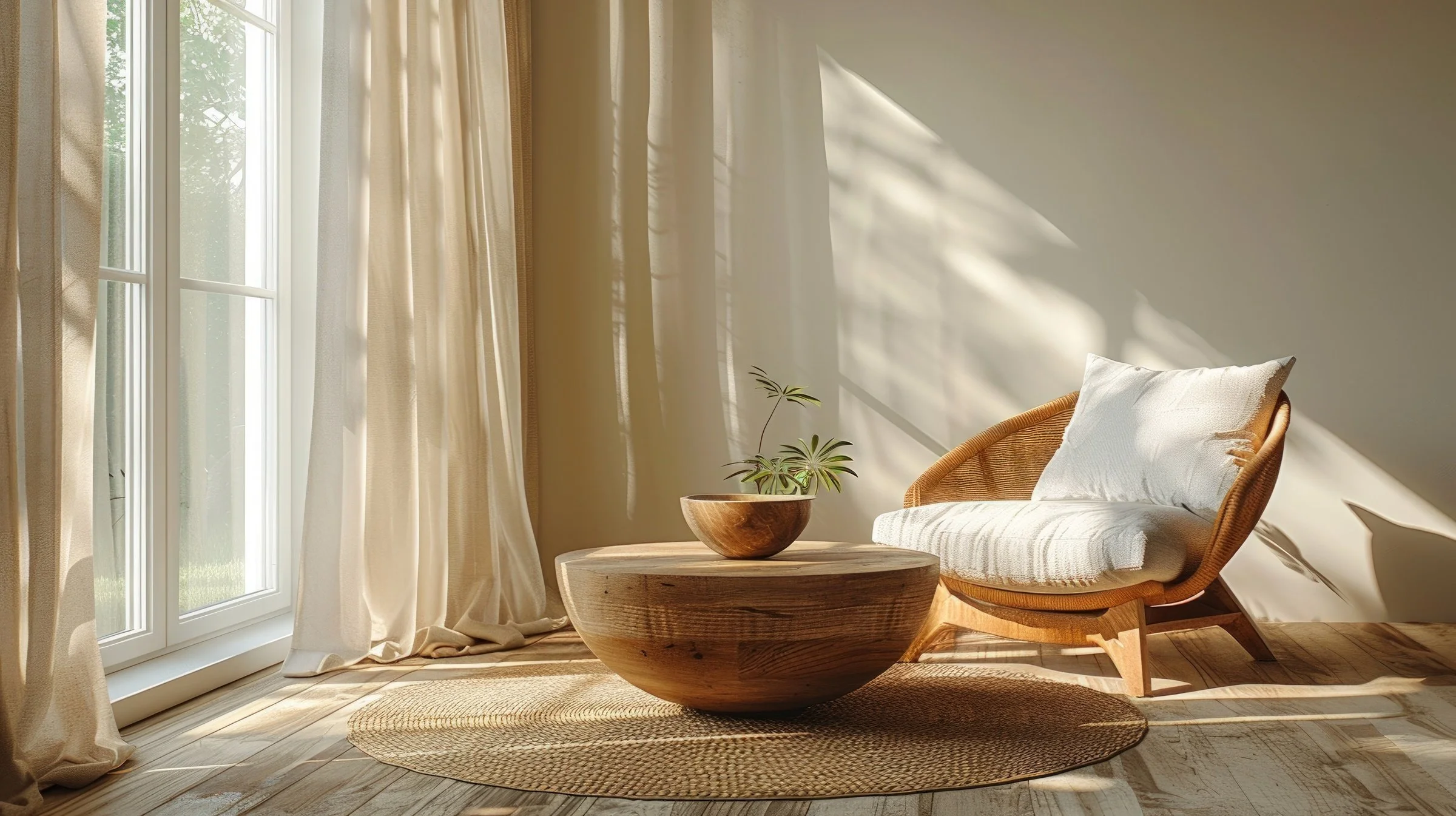
Benefit #3: Biophilic design reduces stress and it's not just a talking point
Biophilic design is the practice of bringing natural elements into interior spaces, not as decoration but as a functional strategy. Natural light. Living plants. Natural materials like stone, wood, linen, and clay. Views of greenery. The sound of water. These aren't preferences. They're biology.
Studies show biophilic interiors reduce stress, boost mood, and support overall wellness, and they simply make your home feel alive.
Interest in biophilic design is up 112% right now, and I understand why. People spent years in homes that felt disconnected and sterile and they started to feel it physically. The body knows what it needs, even when the design industry isn't listening.
Our nervous systems crave the complexity and vitality found in natural environments, not sterile emptiness. The layered textures, the organic shapes, the imperfect surfaces of natural materials. That's what actually calms people down.
At Go Green, we've been building spaces around these principles for years. It's not a new direction for us. It's just become a louder conversation.
Benefit #4: You sleep better
Lighting is the thing most people get wrong and don't know it. Smart lighting has transcended convenience. Circadian lighting design, meaning light that shifts in color temperature throughout the day to align with your biology, is one of the highest-return investments in a wellness home. Morning light that's bright and cool-toned wakes up your cortisol naturally. Evening light that's warm and low signals your body that it's time to wind down.
Most homes are lit the same way from 7 a.m. to 11 p.m. The body has no idea what time it is.
This is one of those things that sounds overly technical until you experience it. I've had clients come back and tell me their sleep completely changed after we redesigned their lighting plan. That's not placebo. That's circadian biology working the way it's supposed to.
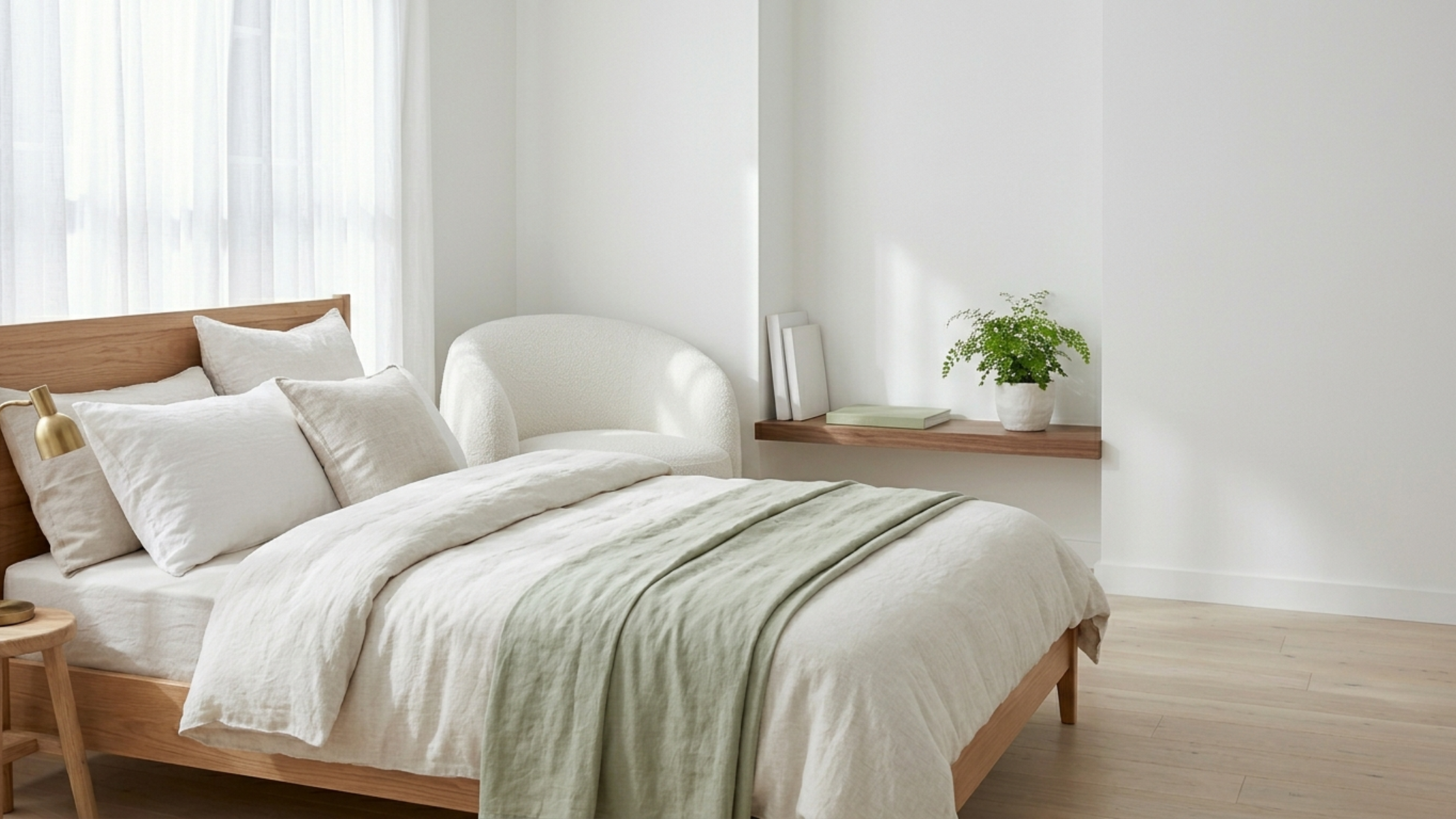
Benefit #5: Non-toxic materials protect the people you live with
This one is personal for me. I became a sustainable interior designer because I started asking questions about what's actually in the things we put in our homes. The answers were uncomfortable.
Formaldehyde in pressed wood. Flame retardants in upholstery. Vinyl flooring that off-gasses phthalates for years. PFAS in stain treatments. These aren't hypotheticals. They're ingredients in most conventional furniture and finish options.
Choosing a wellness-focused approach means choosing differently. Natural latex. Solid hardwood. Organic textiles. Mineral-based paints. These materials cost more sometimes. But they stop adding to the toxic load in your home.
I tell clients this often: the most beautiful room in the world isn't doing anyone any good if the air inside it is quietly making them sick.
Benefit #6: It changes how you use your home
There's a significant shift in the conversations around building a home that supports wellness. People want spaces that cater to intentional moments with design leading the way.
When a space is designed for how you actually live, and not just how a floor plan template assumed you might live, you use it differently. The morning feels slower. The evenings feel more settled. You stop rushing through rooms and start actually inhabiting them.
Indulging in rituals that take time is a key home wellness trend. Spaces that encourage slower living, that build in intentional friction, that make the daily routines feel like something worth doing.
A wellness home is designed around your rituals, not the other way around. Your morning light. Your wind-down corner. Your quiet reading spot. The layout that gives you a moment of exhale before you hit the kitchen. These things don't happen by accident.
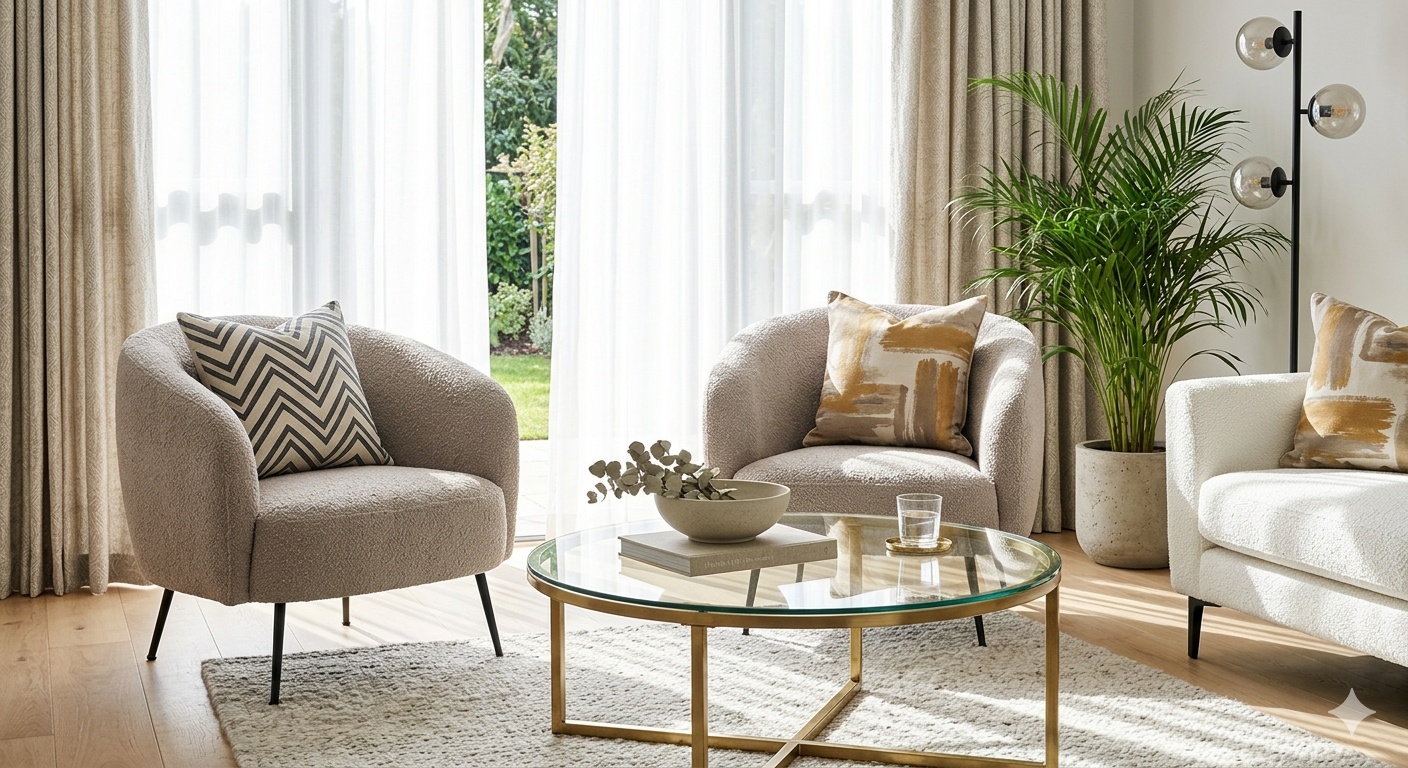
So is wellness interior design worth it?
Here's my straightforward answer: Yes.
Not because it's a trend. Because the benefits are real, measurable, and cumulative. Better air. Better sleep. A calmer nervous system. Less toxic exposure over time. A home that actually helps you recover from your day instead of adding to the noise.
You don't have to gut your entire house to get there. Sometimes it starts with the materials in one room. Sometimes it's the lighting. Sometimes it's a conversation about how you actually want to feel when you walk through your front door.
That's always where I start.
If you're in the Wilmington area and you want to talk about what a wellness-focused home could look like for your space, I'd love to hear from you. This is what we do at Go Green Fine Interiors, and we've been doing it long before it showed up on anyone's trend report.
And if you're not local, that's okay too. We work with clients all over the country through our Virtual Design Services. Same process, same level of care, just done remotely. You share your space, we talk through your goals, and we build something that actually works for how you live. Wellness design doesn't have a zip code requirement.
Judy
Go Green Fine Interiors | Wilmington, NC
References
Baratan, A. (2026, February 4). 7 Home Wellness Trends You Can Expect to See in 2026 — It's Less About 'Performative' Design and. . .. Livingetc. https://www.livingetc.com/ideas/home-wellness-trends-2026
Columnist, J. G. G. (2026, May 8). Top 5 Residential wellness design Trends for 2026. Green Builder. https://www.greenbuildermedia.com/blog/top-5-residential-wellness-design-trends-for-2026
Global Wellness Institute. (2026, April 30). Wellness Architecture & Design Initiative Trends for 2026. https://globalwellnessinstitute.org/global-wellness-institute-blog/2026/04/07/wellness-architecture-design-initiative-trends-for-2026/
Hemsley, S. (2026, January 7). Wellness Design Trends: Creating a Healthy, Happy Home in 2026. Hamiltonparkinteriors. https://hamiltonparkinteriors.com/blogs/news/wellness-design-trends-creating-a-healthy-happy-home-in-2026
Longobucco, A. (2026, January 29). Wellness is the design trend that’s not going Away—Here’s what that means for homes in 2026. AOL. https://www.aol.com/articles/wellness-design-trend-not-going-150000563.html
Parker, M. (2026, May 23). 8 Design trends emerging in 2026. Houzz. https://www.houzz.com/magazine/8-design-trends-emerging-in-2026-stsetivw-vs~185246097
Smith, T. (2026, February 16). Top wellness trends in interior design for 2026. taleahsmith.com. https://taleahsmith.com/2026/02/01/wellness-trends-for-2026/
