

Emerging Interior Design Trends for Your 2027 Home Refresh
Most "trends to watch" lists recycle the same five ideas every January: warm neutrals, curved furniture, a plant in the corner. Those aren't wrong, but they're not what's actually moving in the design world right now. The trends worth knowing for 2027 are stranger, more science backed, and in a few cases, genuinely surprising. Here's what's emerging, why it matters for how your home feels day to day, and how to apply it during your own refresh.
What Is Neuroarchitecture, and Why Is It Suddenly Everywhere?
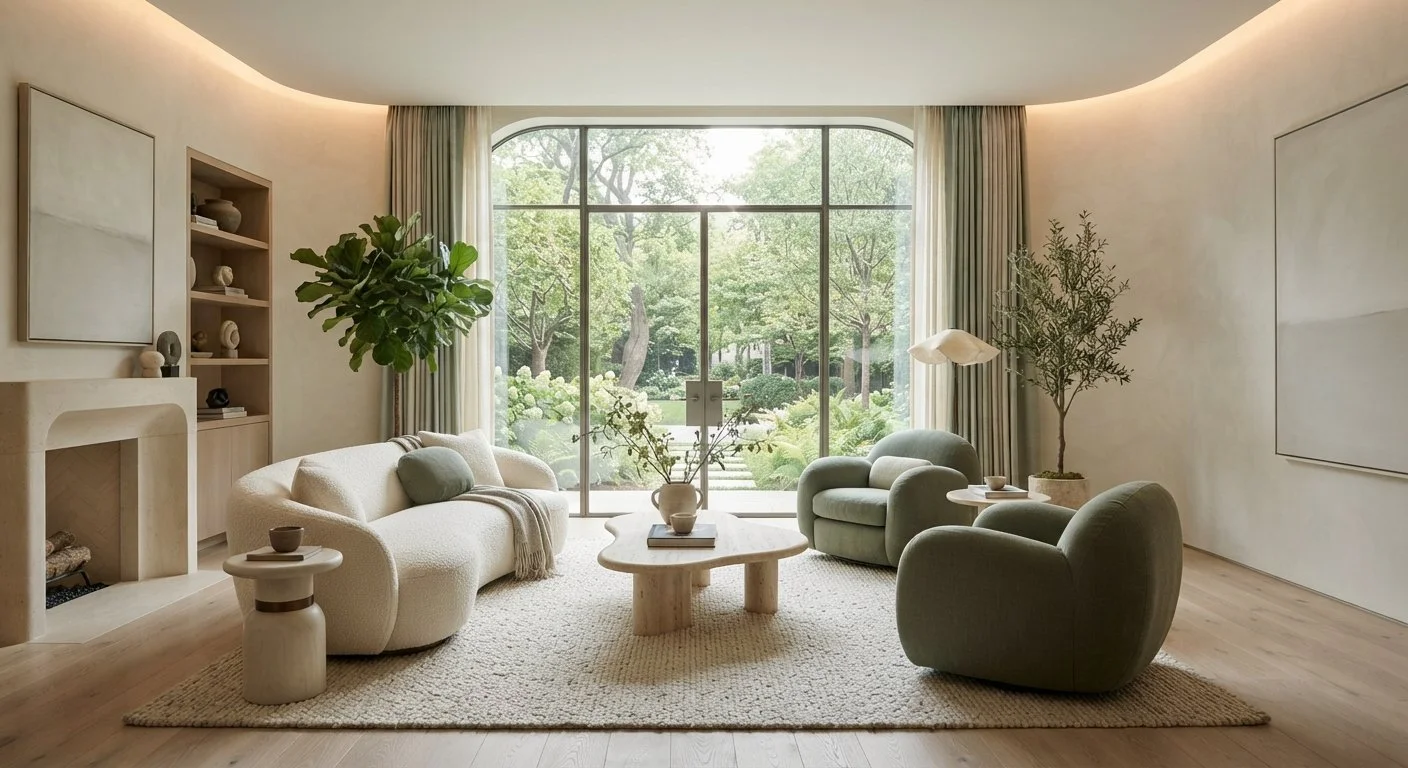
Neuroarchitecture is the study of how a room's layout, light, sound, and materials directly affect brain activity, stress hormones, and mood. It goes further than biophilic design by measuring the response, not just assuming a plant or a window will help.
Researchers now use tools like heart rate variability and EEG tracking to see how ceiling height, sightlines to nature, and acoustic softness change a person's nervous system in real time. Before you consciously register a room, your body has already scanned it for safety through a process called neuroception. A space with harsh angles, hard surfaces, and no visual connection to the outdoors can keep that alarm quietly switched on for hours, even when nothing is actually wrong.
For a home refresh, this shows up in practical choices: softening a hard corner, adding a sightline to a window from your main seating area, or choosing materials that absorb sound rather than bounce it around a room.
Can Lighting Actually Remove Microplastics From the Air?
Yes, and this is one of the least talked about developments in residential lighting right now. New fixture technology pairs standard circadian lighting, which shifts color temperature to match your body's natural rhythm, with built in filtration that captures airborne microplastics and other fine particulates as air passes through the fixture housing.
This matters because most homes accumulate microplastic dust from furniture, textiles, and packaging faster than most people realize. Instead of adding a separate air purifier to every room, these fixtures do double duty: warm, dim light in the evening to support sleep, and quiet filtration running in the background all day. It's still an early technology, but it's the kind of innovation that fits naturally into a health-conscious home without adding visual clutter.
What Are Holographic and Iridescent Finishes, and Do They Actually Work in a Real Home?
Holographic and iridescent finishes are surfaces, tiles, paints, and hardware that shift color subtly depending on the angle of light hitting them, similar to the shimmer on a soap bubble or a beetle's shell. They're part of a broader color direction sometimes called "digital nature," which blends organic pigments with a luminous, almost screen-like quality.
Used with restraint, on a tile backsplash, a piece of hardware, or a single accent surface, this effect adds visual movement to a room without shouting for attention. It pairs surprisingly well with the warm, natural materials already trending for next year. The key is scale. A whole holographic wall can feel like a gimmick. A single iridescent tile inset or a set of cabinet pulls reads as intentional and current.
What Is Mycelium Furniture, and Is It Actually Sustainable?
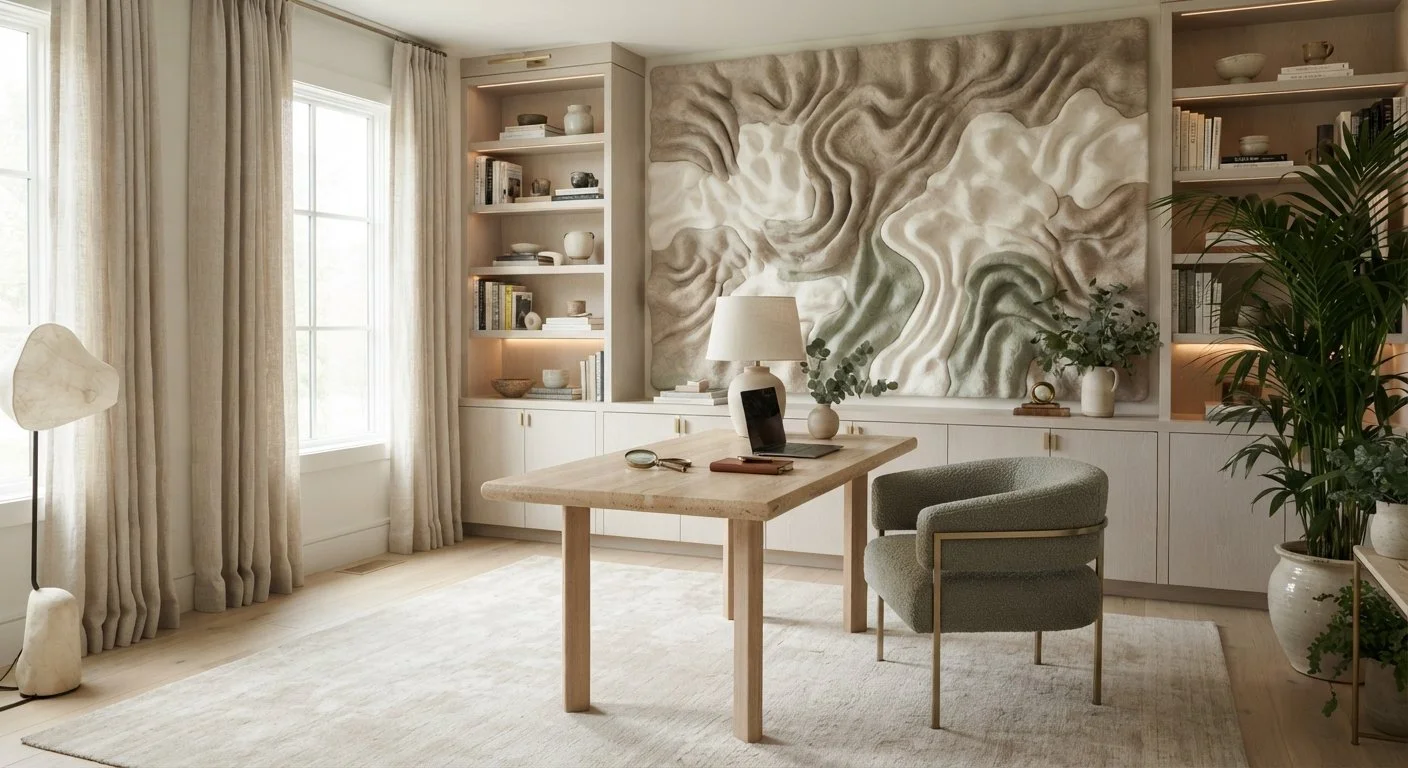
Mycelium furniture and acoustic panels are grown, not manufactured, from the root network of mushrooms. The material is shaped in molds, dried, and finished, resulting in a lightweight, fully biodegradable product with genuinely impressive sound absorbing and insulating properties.
This is one of the most exciting shifts in sustainable materials sourcing in years. Traditional acoustic panels are often made with synthetic foam or fiberglass. Mycelium panels offer comparable performance using a fraction of the energy and none of the off-gassing concerns that come with certain manufactured foams. It's still a newer category, so availability varies, but it's worth asking about if you're already investing in materials selected with health and sustainability in mind.
What Is "Stealth Wellness Tech," and Why Are Bedrooms Leading the Trend?
Stealth wellness tech refers to smart home features built directly into furniture and textiles rather than displayed as visible gadgets and screens. In the bedroom specifically, this means sleep tracking sensors embedded in headboards, near zero electromagnetic field mattresses, and lighting that recreates a natural sunrise and sunset built into the bed frame itself, all without a single visible device on the nightstand.
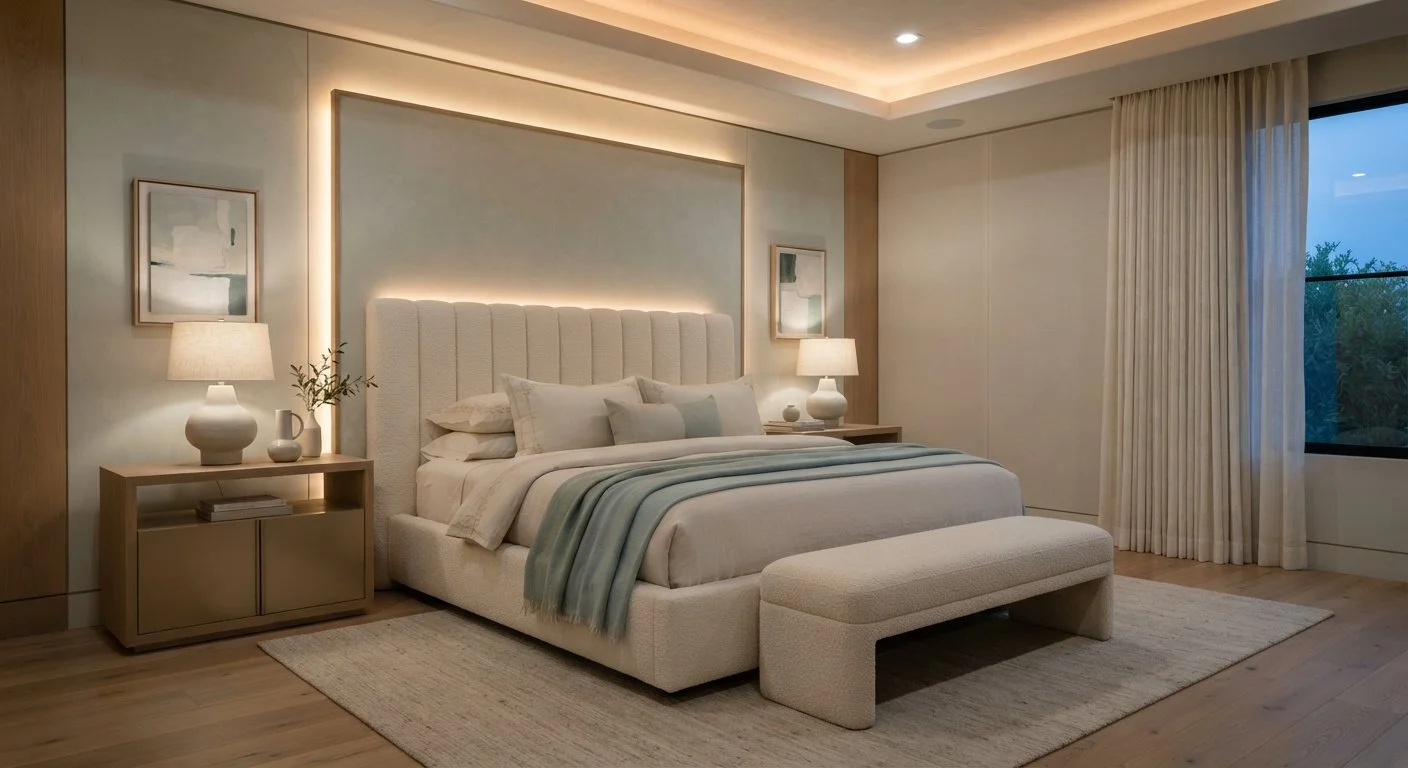
The appeal here is less about the technology and more about what it removes: the glow of charging cables, the hum of visible electronics, the sense of being surrounded by screens right before sleep. For a bedroom refresh, this trend supports something Go Green has always emphasized: your bedroom should calm your nervous system, not compete with it.
What Is "Texture Drenching," and How Is It Different From Color Drenching?
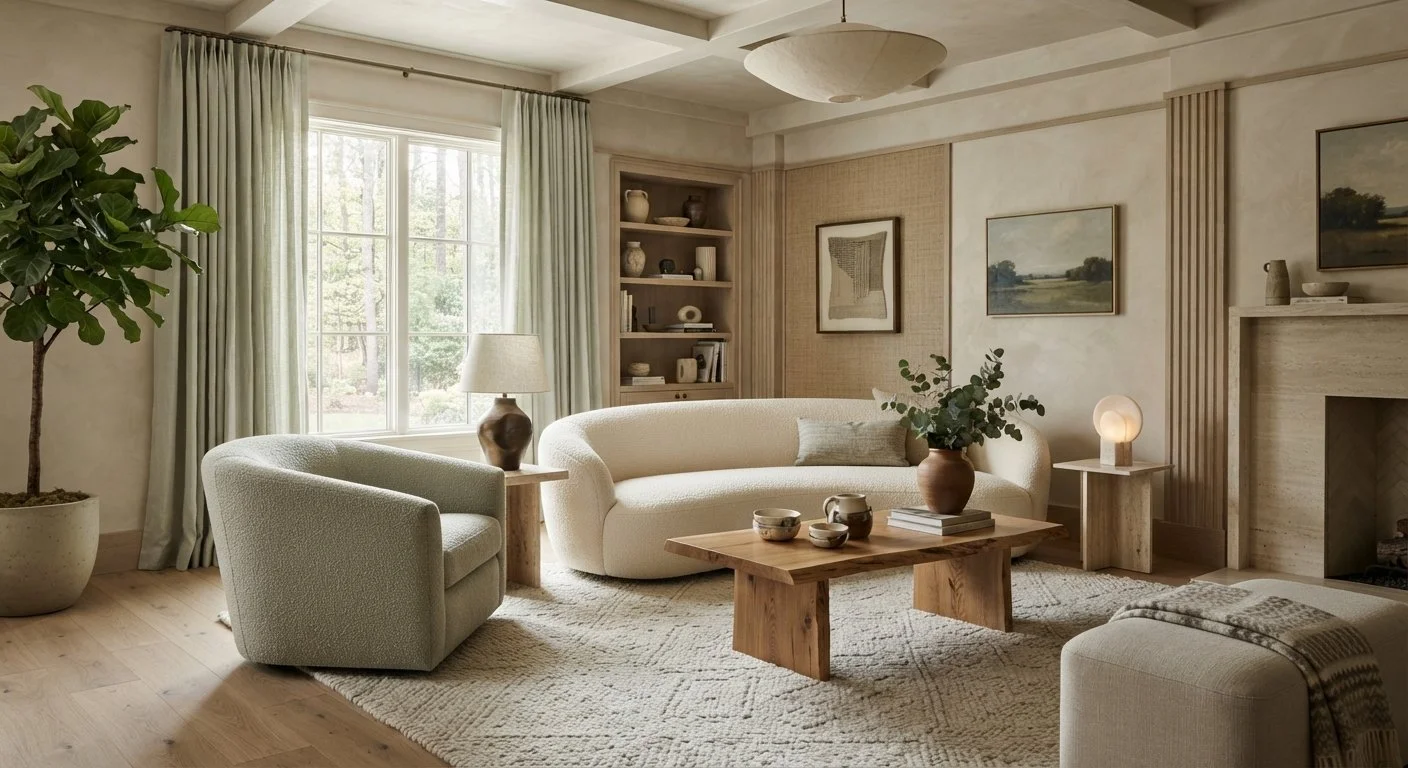
Texture drenching applies one tactile material across walls, floors, and furnishings in a single room, the same way color drenching applies one paint color to every surface. Instead of visual continuity, the goal is sensory continuity, layering drapery, fluted panels, boucle, and soft acoustic finishes to create a hushed, cocoon-like room.
This trend has quiet but real wellness benefits. Soft, layered materials absorb sound the way hard surfaces never can, which lowers the ambient noise level of a room without anyone noticing why it suddenly feels calmer. It also happens to be one of the more budget-friendly trends on this list, since it can be layered in gradually through textiles rather than requiring a full renovation.
How Do You Actually Apply These Trends to a 2027 Home Refresh?
Start with the room where you spend the most unstructured time, usually the bedroom or the primary living space, and choose one sensory layer to address rather than trying to incorporate every trend at once. A single circadian fixture, one textured accent wall, or a mycelium acoustic panel behind a home office desk can shift how a room feels without a full redesign.
The through line across every trend on this list is the same principle Go Green has built its entire practice around: a beautiful home and a healthy nervous system are not separate goals. The materials, the light, and the layout all work together, or they all work against you.
If you're not sure where your own space needs the most attention, that's exactly what a discovery call is for. Whether you're local to Wilmington or working with Judy through the Virtual Design Service, a design plan built around how your home actually makes you feel is a stronger place to start than another cart full of maybes.
