

Timeless and Trendy: Why Your Fall Design Doesn't Have to Choose One
Every fall, I get some version of the same worry from clients: should I play it safe with timeless pieces, or let myself enjoy what's trending right now? The question itself is the problem. As a Certified Sustainable Interior Designer and Professional Home Stager and Redesigner, and a member of NKBA and the Sustainable Furnishings Council, I've never designed a room that was purely one or the other, and the best ones never are. Here's how timeless and trendy actually work together.
Why do people think they have to choose between timeless and trendy design?
Most people assume timeless and trendy are opposites because trend content online is usually framed as a warning: don't buy this, it'll date your home. That framing makes trends feel like a trap instead of a tool, so people either avoid them completely or go all in and regret it later.
In reality, a room made entirely of timeless pieces can feel flat and impersonal, and a room made entirely of trend pieces can feel disposable. The two aren't competing categories. They're two different jobs in the same room: one gives you a foundation that lasts, the other gives you personality and seasonal energy.
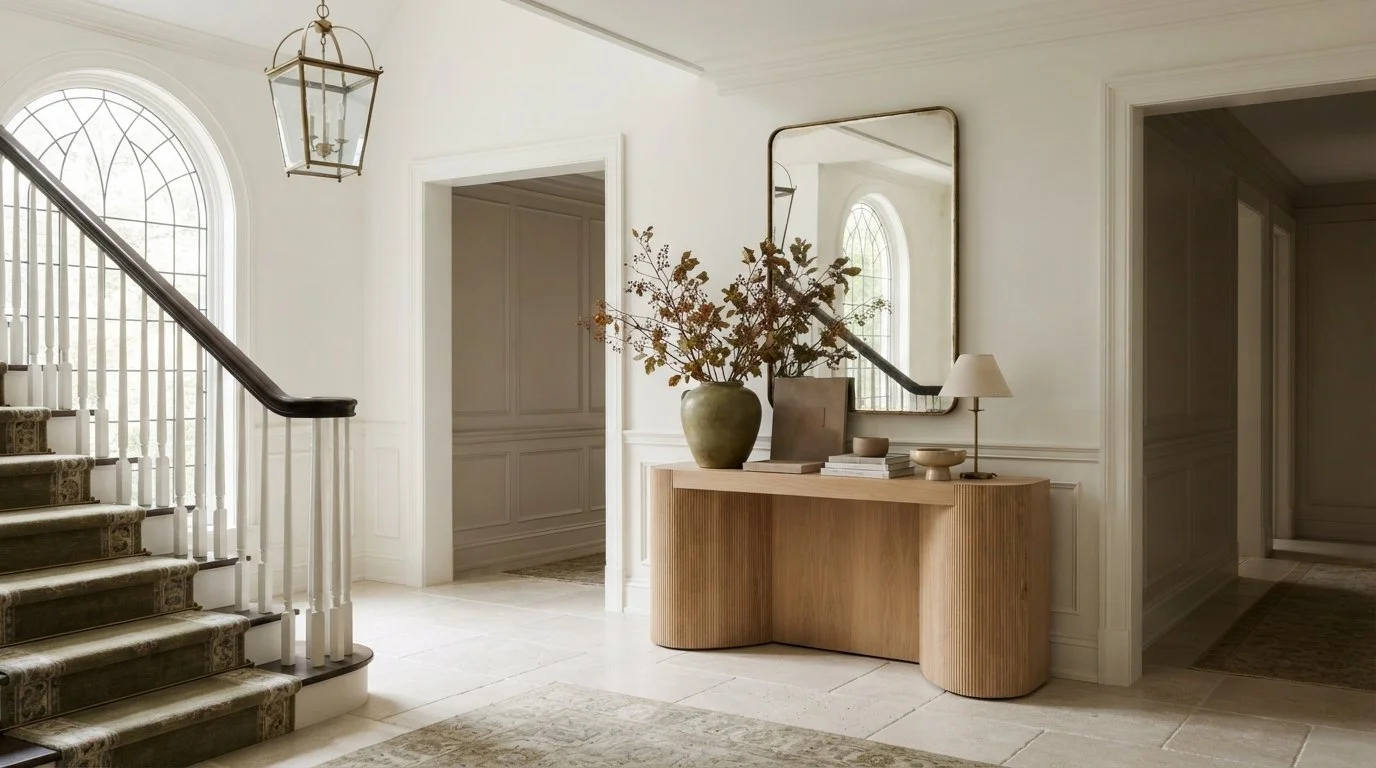
Can a room be both timeless and trendy at the same time?
Yes, and most well-designed rooms already are. The key is that timeless and trendy elements aren't competing for the same budget or the same role in the room, so they don't cancel each other out. They layer.
Think of a living room with a well-made, neutral sofa (timeless, high investment) styled with this season's deep olive and clay throw pillows (trendy, low investment). The sofa will still make sense in ten years. The pillows can be swapped next fall without any real loss. Both are doing exactly what they're supposed to do.
Which pieces should carry the timeless investment in your fall design?
The pieces that cost the most and are hardest to change should be the ones chosen for longevity: sofas, case goods, flooring, lighting, and anything built in. These are worth investing in materials and craftsmanship that age well, like solid wood, natural stone, and warm metals such as bronze or antiqued brass that develop character instead of looking dated.
I also look at what these pieces are made with, not just how they look. Finishes and adhesives can carry VOCs that off-gas into your air long after installation, so a "timeless" piece that compromises indoor air quality isn't actually the investment it appears to be.
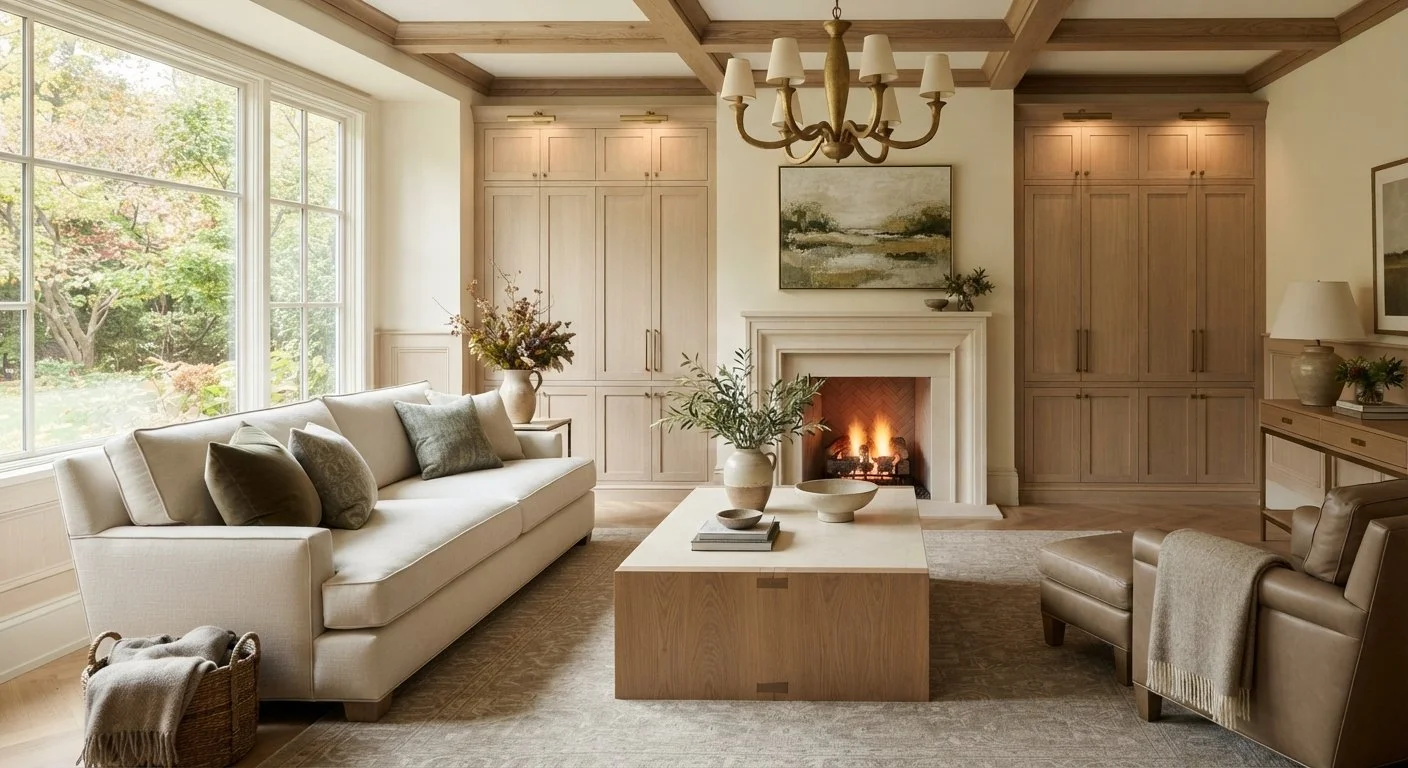
Which pieces are perfect for trend-driven fall style?
Pillows, throws, art, vases, and other small, low-cost accessories are the right place for trend-driven fall style, since they're inexpensive to change and don't require rethinking the whole room. This is where you can fully enjoy whatever is having a moment: deep saturated colors like olive, clay, and mushroom, or a sculptural accent piece with a curved silhouette.
If a trend catches your eye but you're not ready to commit it to something expensive, this is the layer where it belongs. You get to enjoy it now without any risk to the parts of the room that need to last.
How do you balance timeless investment with of-the-moment trends in one room?
A simple rule works well here: the higher the cost and the harder something is to change, the more it should lean timeless. The lower the cost and the easier it is to swap, the more freedom you have to lean trendy. This single guideline solves most of the decision fatigue people feel in the fall.
I usually walk clients through their room in this order: fixed elements first (flooring, built-ins, large furniture), then mid-range pieces (rugs, lighting), then the layer of trend-driven accessories last. By the time you reach the fun layer, the foundation is already protected.
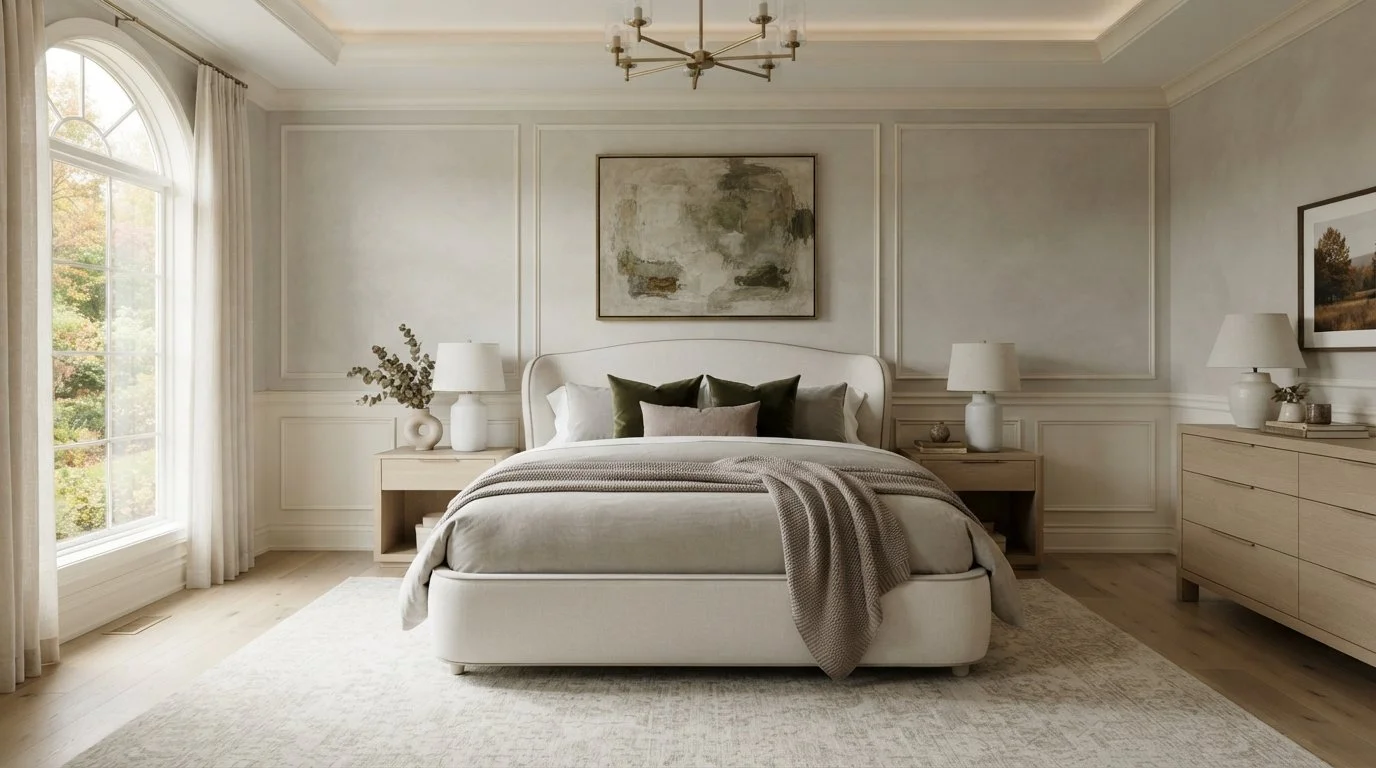
Does mixing timeless and trendy compromise sustainability or indoor air quality?
No, as long as the timeless foundation pieces are chosen with healthier, lower-toxicity materials in mind. Sustainability isn't about avoiding trends. It's about making sure the pieces you're keeping for the long haul are also good for the air you breathe every day.
This is actually where the two goals line up well. Quality materials that support better indoor air quality also tend to be the ones that hold up physically over time, so choosing sustainably and choosing timeless usually point you toward the same pieces.
How do you know when the "both" approach actually works for your home?
It works when your foundation pieces still feel right to you regardless of what's trending, and your trend pieces are cheap enough that swapping them next season feels easy, not wasteful. If either of those isn't true, something is in the wrong layer.
A quick gut check: picture your big furniture pieces five years from now, with no trend context at all. If you still like them on their own, they're doing their job. Then picture your accessories getting replaced next fall without a second thought. If that feels fine, your trend layer is priced and placed correctly.
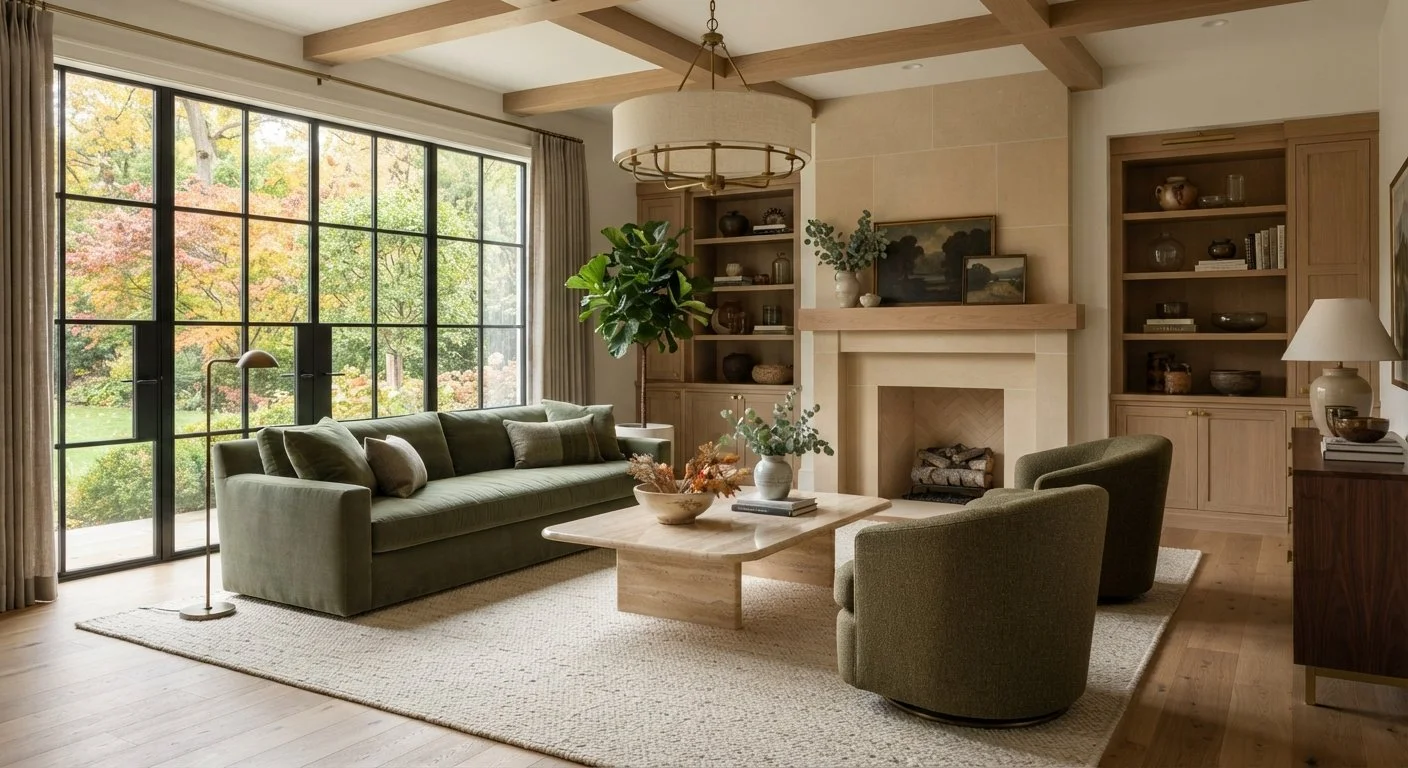
You don't have to pick a side this fall. You just have to know which pieces are earning their place for the long haul and which ones are there to be enjoyed for a season. If you'd like help figuring out which is which in your own home, book a discovery call and let's build a plan together.
Quick Answers
Do I have to choose between timeless and trendy design?
No. The two work best together, with timeless pieces carrying the big investments and trendy pieces living in easy-to-change layers like pillows and accessories.
What's the safest place to spend more money this fall?
Solid, well-made materials that age well: real wood, natural stone, quality upholstery frames, and lighting, since these carry both the highest cost and the longest lifespan.
Where can I fully enjoy a fall trend without regret?
In your lowest-cost, easiest-to-swap layer: pillows, throws, art, and small accessories. These let you enjoy what's current without risking your bigger investments.
