

Fall Interior Design Trends 2026: How to Make Your Home Feel Cozy Without Looking "Seasonal"
Fall is coming. But your home doesn't need pumpkins, plaid, and a shopping cart full of orange décor to prove it. The most sophisticated fall interiors aren't about decorating for a season. They're about creating a home that feels warmer, richer, and more like you.
I see this every year with clients. Someone walks into their own living room in October and it looks like a craft store threw up on the mantel. Nothing wrong with a seasonal accent here and there, but when the whole room shifts into costume for eight weeks, that's not design. That's decoration you'll be un-decorating by Thanksgiving.
Here's what's actually working this fall, and why some of it matters more for your health than you might expect.
What actually makes a fall home feel cozy, not seasonal?
A cozy fall home comes from warm color, layered texture, and low, amber-toned lighting, not from themed objects. The difference is subtle but it's everything. Seasonal decorating adds things to a room. Cozy design adjusts what's already there.
Think about it this way. A pumpkin on your coffee table announces "it's autumn." A room with a deep, warm palette and soft layered textiles simply feels good to be in, in October and in February. That's the whole shift happening in interior design right now. Homeowners are tired of redecorating for the calendar. They want spaces that feel intentional year round, with maybe a small seasonal nod instead of a full takeover.
What colors are designers actually using for fall this year?
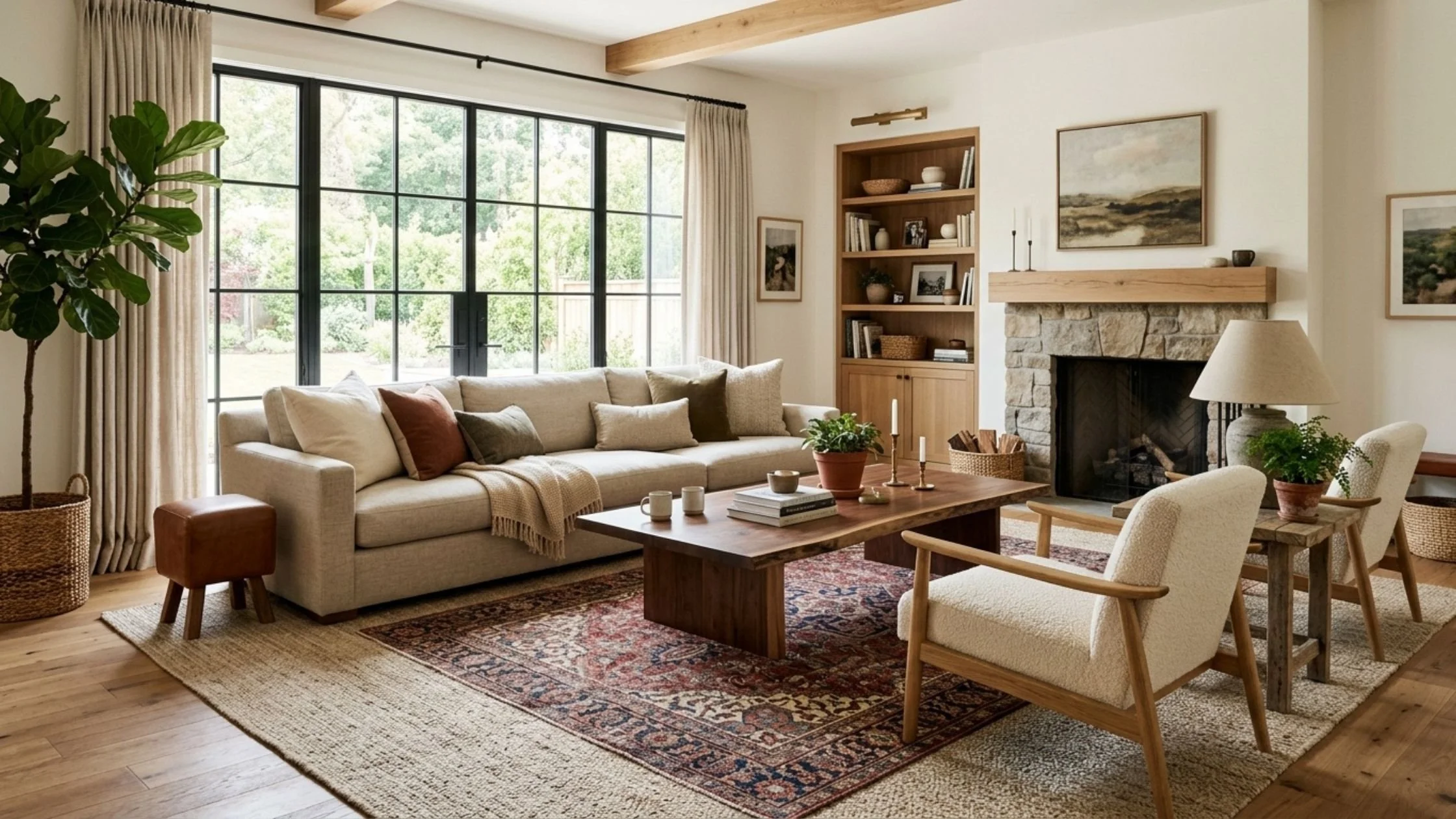
Designers are leaning into tonal, warm palettes built around burnt umber, burgundy, forest green, and deep gold layered over creamy neutrals, rather than the bright orange and rust of past years. The trick is restraint. Pick two or three colors in the same family and let them repeat through the room in different materials, a velvet cushion, a wool throw, a painted trim.
One thing I always tell clients: these deep, moody colors are sensitive to light. A rich burgundy wall glows beautifully in a room with good daylight and warm lamps, and goes flat and muddy in a north-facing room lit by a single cool white bulb. If you're considering a bold fall color on a wall or a large piece of furniture, test it in your actual space at different times of day before you commit. This is exactly the kind of decision I walk clients through, because color without the right light behind it can undercut the whole room.
How does texture create warmth without adding clutter?
Texture creates warmth by giving a room visual and physical depth, so layer, don't match. A single fabric repeated everywhere reads flat. A bouclé chair against a chunky knit throw against a linen pillow against a wool rug reads rich and lived in, without a single seasonal object in sight.
Velvet, bouclé, linen, and nubby wool are doing the heavy lifting this season. Layered rugs, a vintage or wool piece thrown over a larger flatweave, add the kind of weight underfoot that a bare floor never delivers. This is also where sustainable materials genuinely shine. Natural fibers like wool, linen, and organic cotton age beautifully and develop character over years, which fits both the aesthetic and the "buy it once, keep it long" philosophy I build into every design plan.
Why does lighting matter more than any color choice?
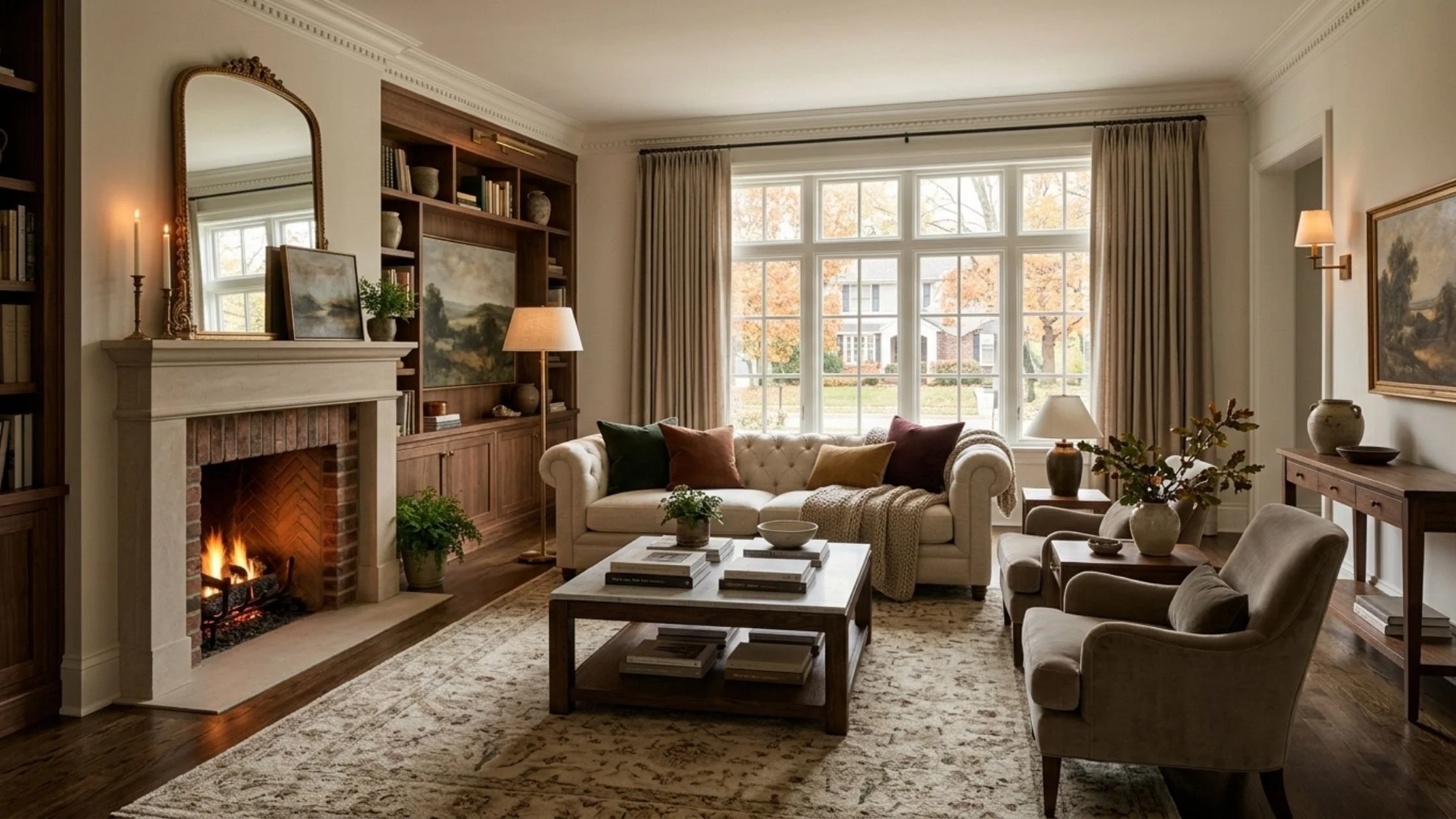
Lighting matters more than color because it sets the room's mood and, physiologically, affects how alert or relaxed your body feels in that space. Warm, amber-toned lighting in the evening supports your natural circadian rhythm, the internal clock that regulates sleep, energy, and mood. Harsh, cool white overhead lighting works against that rhythm, no matter how good your color palette is.
Layering light sources, floor lamps, table lamps, candles, and dimmable overhead fixtures, creates that cocoon-like feeling everyone associates with cozy fall interiors. But it's not just about vibes. Circadian-informed lighting is a real, research-backed piece of neuroarchitecture, and it's one of the most affordable upgrades in this entire trend list. Swap a few bulbs to a warmer color temperature and add one or two lamps to a room, and the difference in how that space feels by 7pm is significant.
Does fall decorating affect your indoor air quality?
Yes, some of the most common fall decorating choices can affect indoor air quality, particularly paraffin candles, synthetic faux florals, and certain fragranced sprays, which can off-gas volatile organic compounds (VOCs) into the air you're breathing at home. This is the piece most fall decorating guides skip entirely, and it's exactly where my approach as a sustainable designer differs.
If candles are part of your fall ritual, and for most of my clients they are, soy or beeswax candles with cotton wicks are a lower-toxicity swap for the paraffin, synthetic-fragrance versions that dominate big box store shelves this time of year. Same goes for faux foliage. Real dried branches, pressed leaves, or a simple bowl of gourds bring the same seasonal warmth without introducing synthetic materials selected purely for a few weeks of use. Small swap, real difference, especially if you're decorating a bedroom or a space where you spend a lot of time.
What's the simplest way to update one room for fall?
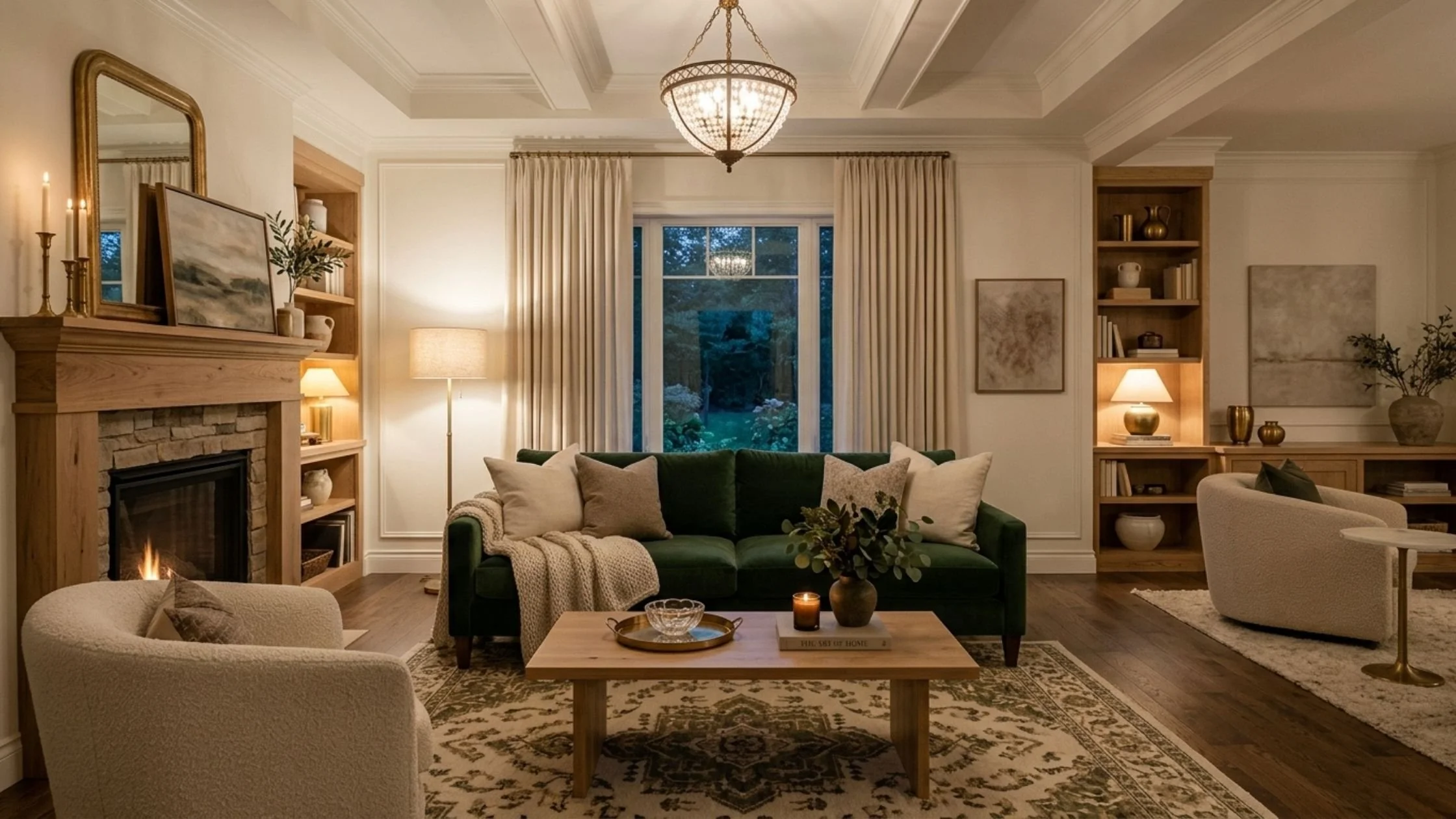
The simplest fall update is one bowl of real seasonal produce, one textured throw, and one warm light source, added to a room that's already well designed. Restraint is the whole trend this year. The cozy corner done with three intentional pieces beats the mantel covered in thirty seasonal knickknacks every time.
If you're only updating one room, start with wherever you spend your evenings, usually the living room or bedroom. Swap in warmer bedding or throws, add one lamp with a warm bulb, and stop there. You'll get more impact from those three moves than from an entire cart of seasonal décor.
A quick fall decorating FAQ
Do I need new furniture to get this look?
No. Most of this trend comes from textiles, lighting, and color, not new furniture. A few throws, pillows, and a lamp swap will get you most of the way there.
What's the real difference between cozy and cluttered?
Cozy has a limited color palette and a few intentional layers. Cluttered adds objects without a plan. If you can't explain why a piece is in the room, it's probably clutter, seasonal or not.
Is this look expensive to achieve?
Not necessarily. The materials matter more than the price tag. A well-chosen wool throw and a couple of warm bulbs cost far less than a full seasonal décor haul, and they'll still be relevant next year.
If you'd like a second opinion on your space before you commit to paint, textiles, or lighting for the season, that's exactly the kind of thing I help clients work through, whether you're local to Wilmington or working with me through the Virtual Design Service from anywhere in the country. I'd love to hear what "cozy" means for your home.
