

Storm-Ready, Not Sad: How to Hurricane-Proof Your Home Without Losing the Design You Love
If you live anywhere near the coast, you already know the drill. Storm season rolls around and suddenly everyone is talking about plywood, storage bins, and moving your favorite chair to the garage. I get it. But here's what I want you to know as a designer who has helped plenty of coastal homeowners through this exact worry: storm-ready and stylish are not opposites. You can protect your home and still walk into a space that feels like you.
What does it actually mean to make your home storm-ready?
Storm-ready means your home can handle wind, water, and power loss without you having to strip it down to nothing every hurricane season. It's less about hiding your style and more about choosing materials, layouts, and furnishings that were built to hold up in the first place. Once your home is set up this way, prepping for a storm becomes a checklist, not a total teardown.
The homeowners I work with in Wilmington deal with this every year, and the ones who feel calmest going into hurricane season are the ones who made a few smart choices ahead of time instead of scrambling in June.
Which materials actually hold up in coastal humidity and storms?
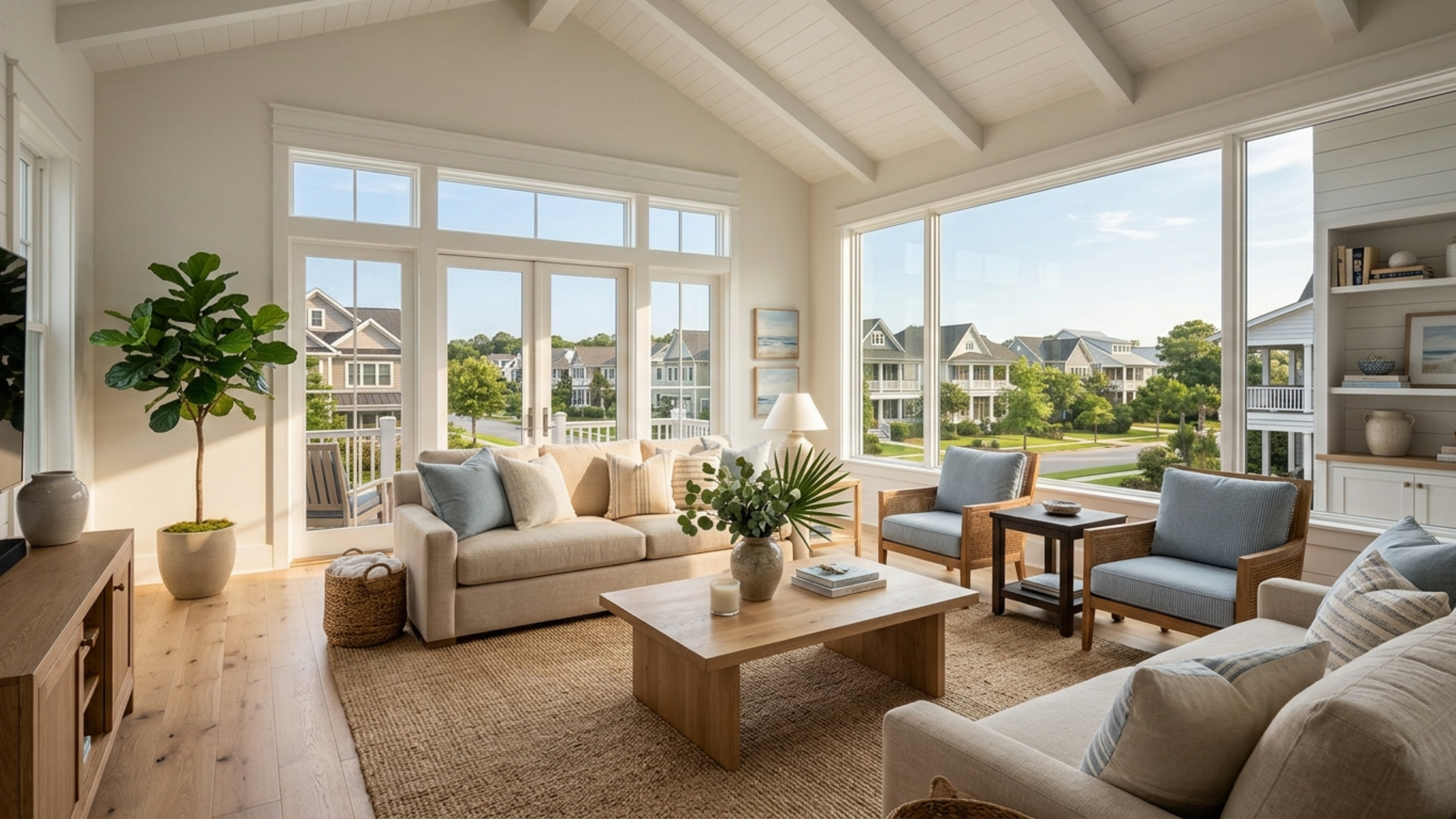
Natural, well-sourced materials tend to outperform cheap synthetic ones here, and that lines up with how I already approach design. Solid wood furniture with a quality finish resists warping better than particleboard, which swells and falls apart the first time humidity spikes. Performance fabrics made from solution-dyed fibers shrug off moisture and won't grow mildew the way older fabric treatments did. Natural fiber rugs with a moisture-resistant backing hold up better than synthetic ones that trap dampness underneath.
I always guide clients toward materials selected with health and sustainability in mind rather than pieces loaded with heavy chemical treatments, so this is really an extension of the same philosophy. Healthier, lower-toxicity materials tend to be the same ones that age well in humid, storm-prone climates. It's not a coincidence. Quality and health usually point in the same direction.
How do you protect your windows without losing the light you love?
Impact windows are the single best investment for coastal homes, and the good news is they've come a long way from the clunky look they used to have. Modern impact glass looks like standard glass and still lets in the natural light your rooms depend on. If a full window replacement isn't in the budget right now, storm film is a solid middle step. It holds shattered glass together during impact and it's invisible once installed, so you're not sacrificing your view for protection.
For window treatments, layer functional with beautiful. Plantation shutters give you a clean, classic look and a bit of extra protection, while your everyday drapery can stay purely decorative. You don't have to choose one over the other.
What furniture and flooring choices actually survive storm season?
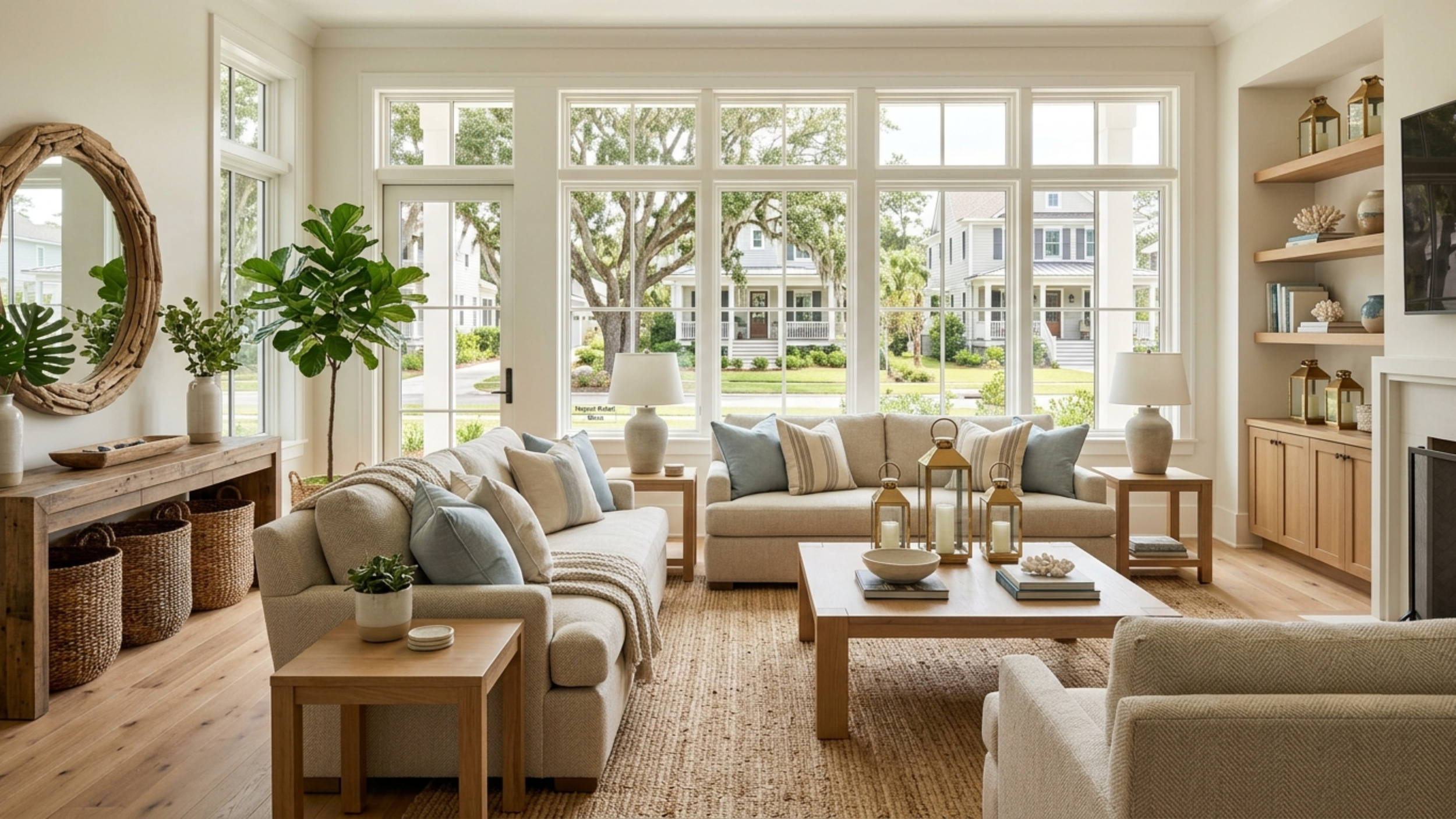
Furniture with a lower profile and simpler lines tends to survive storm prep better because it's easier to move and less likely to get damaged in transit if you do need to shift it. Choose upholstery in performance fabrics, especially in any room near windows or doors. For flooring, luxury vinyl plank and sealed natural stone are far more forgiving of moisture than hardwood or carpet, without giving up that warm, grounded feel a home needs.
If you're furnishing or refreshing a coastal property, this is exactly the kind of decision where a little planning upfront saves you from replacing everything after one bad season.
How do you create a safe room that still feels like part of your home?
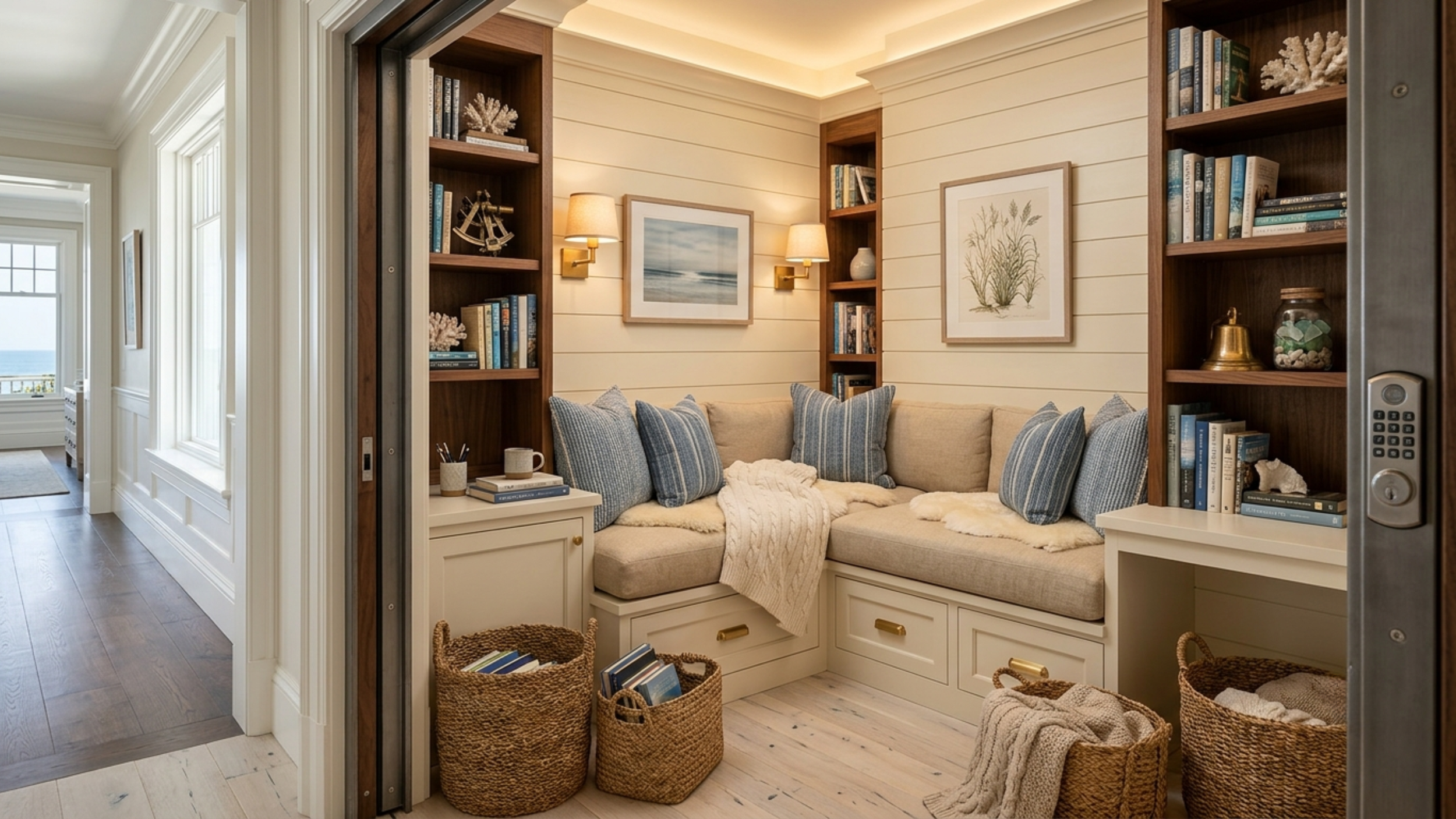
A safe room does not have to look like a bunker tucked into your house. Choose an interior room with no exterior walls, usually a bathroom, closet, or hallway, and treat it like any other space in your design. Add a bench with hidden storage for supplies, layer in soft lighting, and use the same color palette as the rest of your home so it doesn't feel like an afterthought. When it's designed well, it's a room your family actually wants to use, storm or no storm.
What should be on your storm season interior checklist?
Keep this simple and repeatable each year so it never feels overwhelming.
Move outdoor cushions and light furniture indoors before wind picks up. Photograph each room for insurance records before storm season starts, not during it. Keep a small stash of battery-powered lighting that actually matches your decor instead of harsh work lights. Know which pieces in your home need to be elevated or moved first if flooding is a risk. Check that your window protection, whether film, shutters, or panels, is ready to go before the first named storm of the season.
Doing this once, ahead of time, means you're never doing it in a panic.
Can you storm-proof your home if you're not local to Wilmington?
Yes, and this comes up more than people expect. Through virtual design, I work with homeowners and vacation rental owners along the whole coast, not just here in Wilmington, to plan storm-resistant, sustainable interiors from wherever they are. We can go through room by room, source the right materials, and build a plan that fits your home's specific risks, all without me ever stepping foot in the space. It's the same thoughtful process, just done remotely.
The bottom line
Hurricane season is part of life if you live near the coast, but your home doesn't have to look like it's constantly bracing for impact. With the right materials and a little planning, you get a home that's genuinely ready for a storm and still feels like the one you fell in love with.
If you want help figuring out where your home stands right now, reach out and let's talk through it, whether you're local to Wilmington or working with me through our virtual design service.
